Moisture Diagnostics Before You Ever Quote a Waterproofing Job
Most failed membranes were installed over a substrate that was already wet. Six measurements, taken before the quote, decide whether the system has a chance.
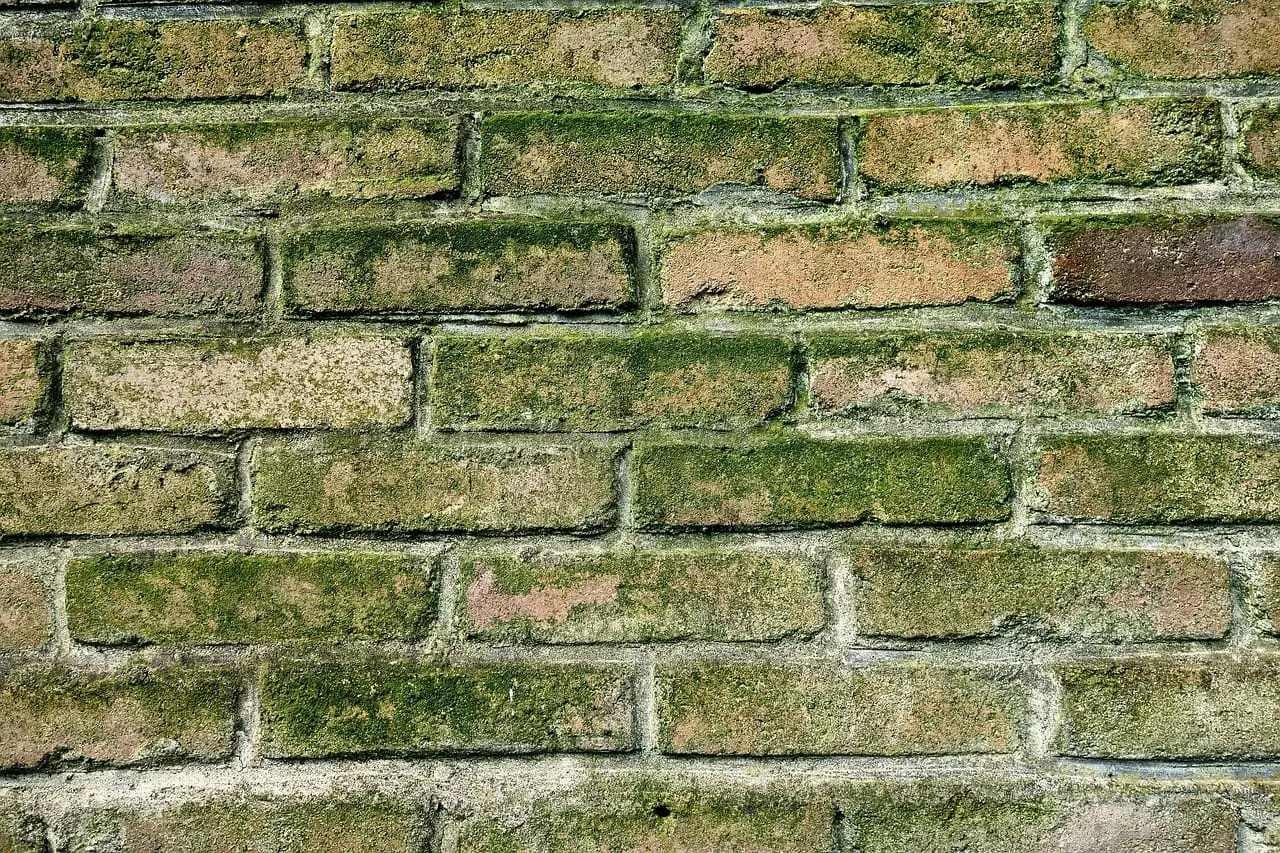
Waterproofing failures are usually blamed on the membrane. In post-mortems, the more common finding is that the membrane did exactly what it was designed to do over a substrate that should never have been covered. Water trapped under a vapour-tight layer will find a path — through a weak joint, up a wall, out at a cold bridge — and the leak will appear somewhere unrelated to the defect.
Which is why the most valuable hour on a waterproofing project is spent before the quotation is written, measuring rather than assuming.
1. Moisture content of the slab, by a method that measures moisture
Handheld meters that read electrical resistance or capacitance are useful for finding variation, and unreliable for absolute values. They are affected by salts, carbonation, reinforcement proximity and surface contamination, and their readings cannot be converted into a percentage with any confidence.
Two methods give numbers you can specify against:
- Calcium carbide / CM test (ASTM F2659 screening, D4948 for the carbide method) — a sample of concrete is sealed with calcium carbide in a pressure vessel; the acetylene produced is measured and converted to moisture content by weight.
- In-situ relative humidity probes (ASTM F2170) — holes are drilled to a specified depth, lined, sealed, and allowed to equilibrate before reading relative humidity. This is the reference method for flooring and coatings, and the only one that reports the condition at the depth where the membrane will sit.
For a slab-on-grade, readings should be taken at the depth of the slab rather than at the surface, and at a frequency that reflects the area — one set of readings per 100–200 m² as a starting point, more where there are visible damp patches, repairs or cold joints.
2. Surface and subsurface moisture distribution
Moisture is rarely uniform. A slab that reads 3.8% in the middle of a bay and 6.5% along a wall is telling you about a source — failed dpc, a leaking downpipe, rising damp, or a screed that was laid wet. Plot the readings on a plan. The map is the diagnostic; the average is a fiction.
3. Salts, and why they matter twice
Chlorides and nitrates attack reinforcement and interfere with adhesion. Sulphates attack cementitious repair materials. Nitrates in particular are associated with animal waste and fertilisers, and they can cause flooring adhesives to fail, which is often how a moisture problem is discovered in the first place.
Test where dampness is present or where the building had agricultural, industrial or animal use. The result affects both the repair material and the membrane choice; a cementitious system over a nitrate-contaminated slab may need a barrier coat or a different chemistry.
4. Substrate strength and surface condition
A membrane is only as good as the surface it bonds to. Pull-off testing gives a tensile bond value; a simple scratch or screwdriver test identifies laitance and weak screeds. Contamination — curing compounds, oils, old adhesive, paint — must be removed mechanically, not chemically washed, and the resulting profile must suit the primer.
Two quick checks that catch most problems: water droplet absorption (a droplet that beads on the surface indicates contamination or a sealer), and a sand-patch or straightedge check for hollows that will pond.
5. Temperature, dew point and drying conditions
Ambient conditions are part of the measurement, not the weather report. Record substrate temperature, air temperature, relative humidity and dew point at the time of survey and at the time of application. Most membrane systems require the substrate to be at least 3 °C above dew point and above a minimum temperature, and those conditions change through the day on an exposed roof.
Also record the drying capacity of the space. An unventilated basement with standing water at the perimeter will not dry out because a dehumidifier was hired for a week; the source has to be dealt with first, and the drying period has to be estimated from the readings, not the programme.
6. What the building is expected to do afterwards
The last measurement is not a measurement at all: it is the intended service condition. A roof membrane, a wet-room floor and a basement wall face three different vapour drives. A system that is vapour-tight on the warm side of a roof assembly traps moisture in the deck; a cementitious crystalline coating on a floor slab will not tolerate movement at a crack.
| Intended condition | Governing risk | Selection driver |
|---|---|---|
| Exposed roof | UV, thermal cycling, ponding | UV-stable membrane, drainage falls, seam detail |
| Wet room / balcony | Intermittent water, movement | Crack-bridging, elastic, bonded to substrate |
| Basement, external face | Hydrostatic head, backfill damage | Drainage board, protection layer, robust membrane |
| Basement, internal face | No external access, vapour drive | Waterproof coating or injection, with drainage considered |
| Plant room / industrial floor | Chemical exposure, abrasion | Chemical-resistant resin system, not a generic membrane |
Where the moisture reading and the intended system disagree, the system loses. That is the rule that avoids nine out of ten callbacks: if the slab will not dry to the required level before the programme runs out, the answer is either a system that tolerates the moisture, a longer programme, or a vapour-control layer — never a primer marketed as a moisture suppressant applied over a reading the manufacturer would refuse.
Drying is slower than everyone thinks
A conventional screed dries at roughly 1 mm of depth per day under good conditions, and considerably slower in a cold, humid basement with no ventilation. A 70 mm screed is therefore a two- to three-month proposition, not a fortnight. Surface drying is not the metric; the probe at depth is.
If the programme does not allow that, the options are a rapid-drying screed (specified at the outset, not chosen at the end), a surface damp-proof membrane with documented tolerance, or a redesign of the assembly. All three are cheaper than a failed bond.
What the survey report should contain
A report that a contractor can quote against and an owner can rely on:
- Plan with test locations numbered, and the date and time of each reading.
- Method used, instrument, calibration status and depth of measurement.
- Moisture readings in the specified units, with the acceptance threshold stated.
- Salt results where relevant, with the test method.
- Temperature, humidity, dew point and substrate temperature at survey.
- Pull-off or surface strength results, with the failure mode (cohesive in substrate, cohesive in repair, adhesive).
- Photographs of defects, repairs and any area excluded from the survey.
- A stated conclusion: the substrate is or is not suitable, with the drying or preparation required.
That last line is the one clients remember. A survey that ends with “readings vary” is a data dump. A survey that ends with “not suitable for bonded membrane until the perimeter leak is repaired and the slab reaches 4.5% or less; estimated four weeks” is a decision.
Keep reading
Related notes from the same sections of the desk.

Writing a Method Statement That Survives the Inspector
A method statement is not a description of what you plan to do. It is the document an inspector uses to decide whether you were allowed to do it. Write accordingly.
Carbon Fibre Strengthening: Nine Details That Decide Whether the Laminates Work
The design calculation is rarely what fails on a CFRP strengthening job. These are the nine execution details that separate a working retrofit from a decorative one.
Repair or Replace? The Numbers Owners Actually Ask For
Strengthening is rarely chosen on engineering merit alone. Five comparisons that decide the argument, from downtime and embodied carbon to residual life.