Epoxy or Polyurethane? Choosing an Injection Resin for Crack Repair
Both resins go into a crack through a port. Only one of them is structural, and the choice depends on whether the crack is moving, wet or wider than you assumed.
Technically reviewed by Dr. Ayşe Demir, structural engineering.
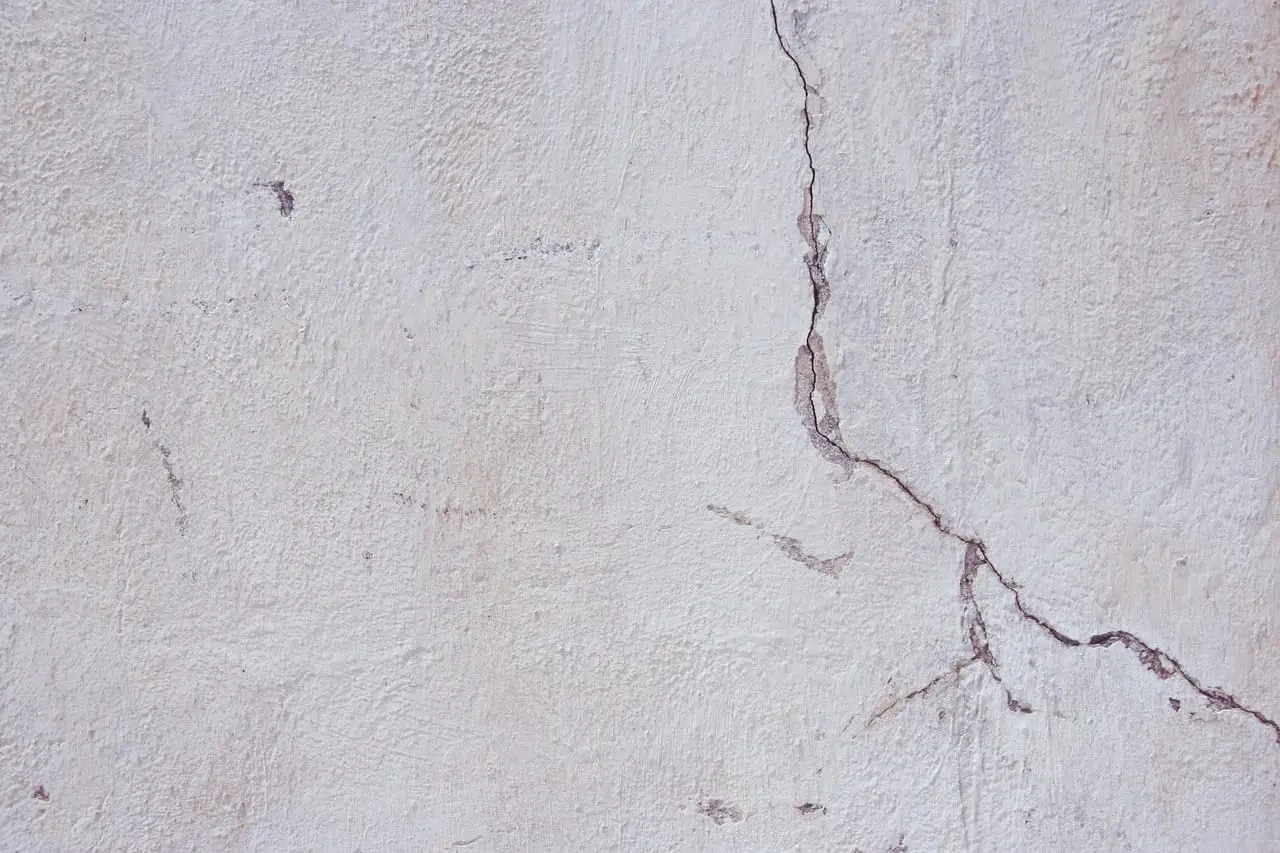
A crack is a piece of information before it is a defect. It tells you where the tensile stress exceeded the capacity of the concrete, whether the cause was plastic shrinkage, thermal movement, overload, restraint or settlement, and whether it is still active. Injection is the act of putting something into that information channel. Choosing the wrong resin does not repair the crack; it seals the evidence and leaves the mechanism running.
The two families used in practice — epoxy and polyurethane — are not interchangeable grades of the same product. They answer different questions.
What each resin is for
Epoxy injection restores structural continuity. A low-viscosity, two-part epoxy injected into a crack in sound concrete cures to a bond that is typically stronger than the surrounding material, transferring tensile and shear stress across the crack face. It is the right answer for dormant cracks in structural members where the cause has been addressed and the concrete either side of the crack is sound.
Polyurethane injection is for water. Water-reactive polyurethane grouts foam on contact with moisture, expand, and form a flexible, hydrophobic seal. They are used for active leaks, wet cracks, construction joints, and where differential movement is expected to continue — basement walls, retaining structures, tunnels, reservoirs. They seal; they do not restore structural continuity.
A shorthand that holds up in most arguments: epoxy is a structural repair, polyurethane is a water control measure. If the job brief says “stop the leak and make it sound again”, it may be two operations, not one.
The decision variables
| Question | Points to epoxy | Points to polyurethane |
|---|---|---|
| Is water flowing through the crack? | No | Yes, active or intermittent |
| Is the crack still moving? | No — dormant | Yes, or movement is expected |
| Is the member structural? | Yes | Not primarily |
| Crack width | 0.2 mm to several mm, cleaned | Any width, including hairline leaks |
| Substrate condition | Sound concrete either side | May be damp, deteriorated, or below grade |
| Service temperature | Within the resin’s cured range | Flexible seal tolerates cycling |
Two caveats matter more than the table. First, an active leak must be stopped before any structural repair is attempted — you cannot bond to a face that water is crossing. Second, a crack that is propagating because the structure is under-designed or overloaded will reopen any rigid repair. Injection is not a substitute for strengthening.
Crack width, cleanliness and access
Low-viscosity epoxy needs a continuous path. Cracks narrower than roughly 0.2 mm may not accept resin at reasonable pressure, and the practical minimum depends on the product’s viscosity and the injection pressure available. Cracks wider than about 6 mm usually need a different approach entirely: route and seal with a repair mortar before injection, or treat as a joint.
Every injection job stands or falls on cleaning. Flush the crack with water or oil-free compressed air, then dry it if the resin is moisture-sensitive. Dust in a crack forms a weak layer between resin and concrete, and the pull-off result will show it.
Ports, pressure, and the temptation to over-pressurise
Ports are typically drilled at an angle to intersect the crack at mid-depth, spaced to suit the crack width and the resin’s flow — often 200 to 300 mm apart, closer on tight cracks. Seal the surface between ports with a suitable cap or gel so the resin travels in the crack rather than across the face.
Injection pressure should be the minimum that moves the resin. Low pressure, slow fill and a visible resin line are the signs of a controlled job. High pressure does one of two things: it delaminates the surface seal, or it opens the crack further and hydraulically jacks the structure. Neither is a repair.
Sequence from the lowest port upward, so that resin pushes air ahead of it rather than trapping it. Stop when resin of the correct consistency appears at the next port, cap, and move on.
Curing and verification
Epoxy cure is temperature-dependent: a system that reaches handling strength in a day at 20 °C may need two or three at 8 °C. Keep the surface above the manufacturer’s minimum for the full cure window. Do not load the member, and do not drill near the repair, until cure is complete.
Verification is usually a combination of core sampling and visual inspection of extracted cores, plus a check that no ports were missed. On water control work, verification is simpler and more brutal: wait. A leak that returns after two weeks was not sealed, whatever the invoice says.
Common failure modes
- Injecting an active leak with epoxy. The resin never bonds, and the water finds a new path beside it.
- Skipping the cause. A crack from alkali–silica reaction, thermal movement or settlement will reopen regardless of the resin.
- Wet substrate with a moisture-sensitive system. Bond strength drops to a fraction of the datasheet value.
- Ports that miss the crack. More common than anyone admits, particularly on curved or irregular cracks.
- Over-pressure. Crack faces jacked apart and a surface seal blown off — sometimes on a member that was previously adequate.
The rule that keeps jobs out of trouble is unglamorous: diagnose the crack, stop the water, then decide whether you are restoring structure or controlling ingress. The resin choice follows from that sentence, not the other way round.
Keep reading
Related notes from the same sections of the desk.

Glass, Carbon or Aramid: A Selection Matrix for FRP Strengthening
Three fibres, three cost points, three failure profiles. A practical comparison of modulus, elongation, durability and cost for structural strengthening.

Carbonation Depth Testing: What the Phenolphthalein Line Actually Tells You
The purple line is not a measurement of damage. It is a pH indicator read against a rough surface, and misreading it is how good concrete gets replaced.
Repair or Replace? The Numbers Owners Actually Ask For
Strengthening is rarely chosen on engineering merit alone. Five comparisons that decide the argument, from downtime and embodied carbon to residual life.